3 Aug 2026
Regulatory Influences on Symbol Probability Matrices in Video Slot Designs Across Jurisdictions
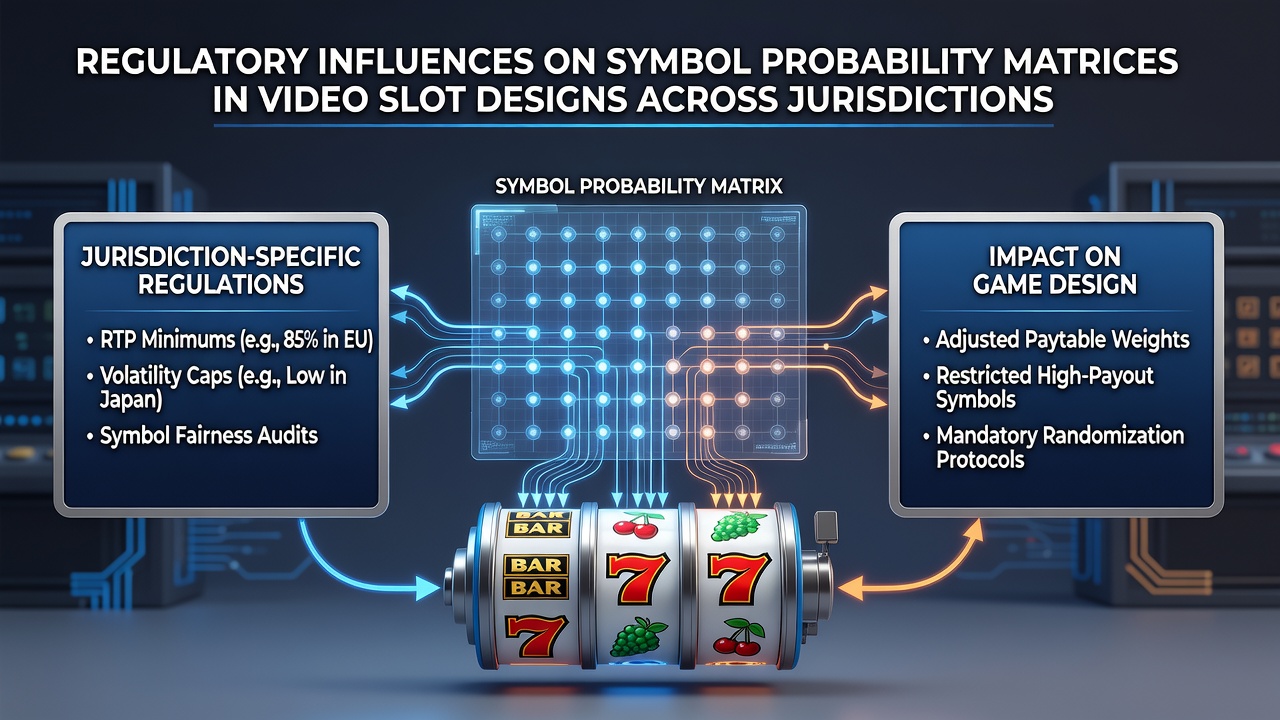
Regulatory frameworks shape how developers assign probabilities to symbols on video slot reels, and these rules vary sharply by jurisdiction because each authority sets its own testing standards, return-to-player minimums, and restrictions on symbol clustering. Manufacturers must calibrate symbol probability matrices to satisfy local approval processes before any game reaches the market, which means the same base game often receives multiple matrix versions to meet differing compliance requirements.
United States State-by-State Variations
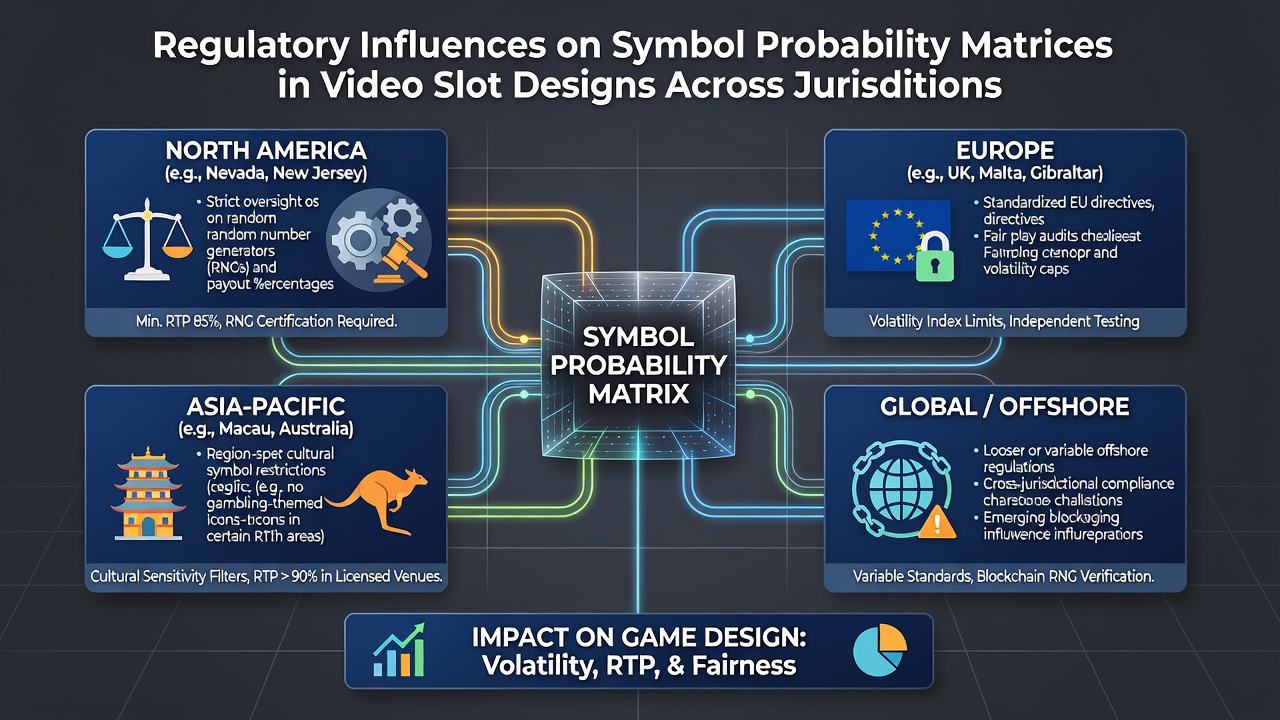
Nevada's Gaming Control Board requires independent laboratory verification of every reel strip configuration, and this process directly limits how frequently high-value symbols can appear in the matrix while still allowing operators to meet the state's 75 percent minimum RTP threshold. Pennsylvania and New Jersey apply similar laboratory reviews yet impose additional caps on consecutive symbol placements, forcing designers to spread premium icons across more reel positions than they might otherwise choose. Data from approved game libraries shows that Nevada titles tend to feature denser low-value symbol clusters on the first two reels compared with titles certified in Atlantic City, where regulators emphasize balanced distribution across all five reels.
European and Canadian Regulatory Approaches
Malta's gaming authority evaluates symbol probability matrices through a combination of mathematical modeling and live simulation runs that must demonstrate consistent performance over millions of spins, and this requirement often results in matrices that reduce the density of scatter symbols on middle reels to avoid triggering bonus features too frequently. Ontario's Alcohol and Gaming Commission applies comparable simulation standards but adds a specific rule against symbol weighting that creates apparent near-miss patterns on the visible reel window, compelling developers to adjust virtual reel lengths and probability weights accordingly. Observers note that games certified in both Malta and Ontario frequently carry slightly higher base game hit frequencies than their U.S. counterparts because the European and Canadian frameworks prioritize session pacing metrics during the approval stage.
Australian and Asian Market Requirements
Australian state regulators, particularly in New South Wales and Queensland, mandate that symbol probability matrices remain fixed once a game receives certification, and any subsequent change requires a full re-evaluation that can take several months. This policy encourages developers to build matrices with stable long-term distribution patterns rather than relying on dynamic weighting systems that might trigger additional review. In Macau and Singapore, authorities focus on preventing symbol matrices from concentrating jackpots on single reels, which has led to widespread adoption of staggered probability tables that distribute progressive triggers evenly across multiple reel positions. Recent filings from August 2026 show several major studios submitting revised matrices for existing titles in these markets to align with updated anti-clustering guidelines that took effect earlier in the year.
Technical Implementation and Compliance Testing
Laboratories test symbol probability matrices by running extensive spin cycles that verify both theoretical RTP and actual symbol distribution under real gameplay conditions, and any deviation beyond permitted tolerances forces a redesign of the weighting tables. Developers therefore maintain separate matrix libraries for each target jurisdiction, often adjusting virtual reel lengths or introducing additional blank positions to meet local constraints while preserving the core paytable structure. Those who've examined certification records across multiple markets find that games released simultaneously in the United States and Europe typically feature two or three distinct matrix variants rather than a single universal configuration.
Recent Developments in 2026
Throughout 2026 several jurisdictions updated their evaluation protocols to include more granular analysis of symbol clustering patterns, and these changes have prompted studios to recalibrate matrices in titles already approved in earlier years. Pennsylvania introduced new documentation requirements for any matrix that places premium symbols within two positions of each other on consecutive reels, while Queensland authorities began requiring disclosure of the exact virtual reel length used for each symbol type. These updates have lengthened approval timelines in both regions, yet they also provide clearer technical benchmarks that designers can reference when building initial probability tables.
Conclusion
Symbol probability matrices in video slots continue to evolve under the pressure of jurisdiction-specific rules that address everything from minimum RTP levels to restrictions on visual near-miss effects, and developers respond by maintaining multiple calibrated versions of each game. As regulatory bodies refine their testing methodologies in markets from Nevada to Ontario and Queensland, the technical documentation required for approval grows more detailed, which in turn shapes how studios allocate resources during the design phase. The result is a global landscape where the same game title can present noticeably different reel behavior depending on the regulatory environment in which it operates.