How Symbol Transition Timings in Multi-Reel Slots Align With Regulatory Testing Protocols Across North American Jurisdictions
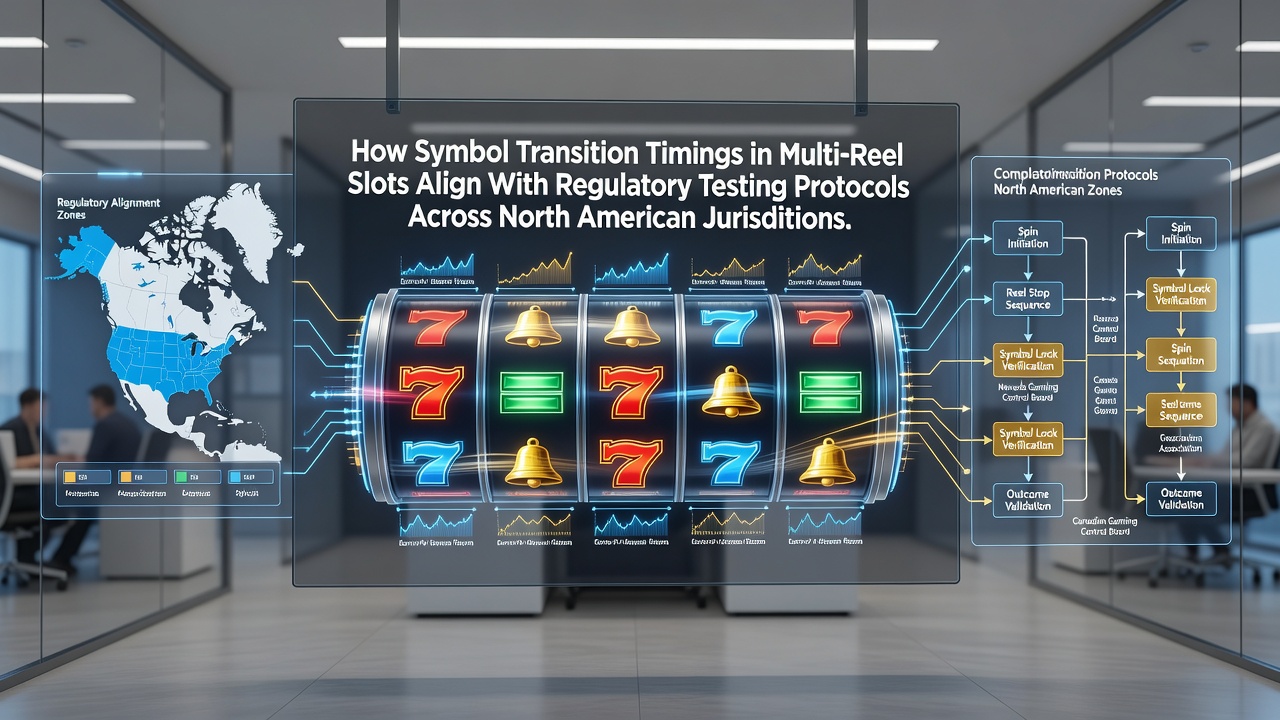
Multi-reel slot machines operate through precise symbol transition timings that determine how fast images move between stops, and these timings undergo strict evaluation under regulatory testing protocols in North American jurisdictions where gaming commissions require documented compliance before any title reaches player devices. Testing labs measure reel spin durations, symbol stop intervals, and animation sequences against defined thresholds to confirm outcomes remain independent of prior results while satisfying fairness standards set by state and provincial authorities.
Core Mechanics of Symbol Transitions in Multi-Reel Designs
Symbol transitions occur when virtual reels advance from one position to the next, and manufacturers calibrate these movements in milliseconds to produce smooth visuals without introducing patterns that could affect random number generator outputs. Engineers program transition windows to fall within ranges such as 50 to 150 milliseconds per symbol step, and regulators verify these values during certification because deviations can trigger additional scrutiny under existing rules. Data from certified platforms shows that consistent transition intervals help maintain session pacing across thousands of spins, and labs document every adjustment to ensure no external inputs influence final stops.
Regulatory Bodies and Their Testing Standards
Authorities in Nevada, New Jersey, Michigan, and Ontario each maintain separate yet overlapping requirements for timing verification, and the Nevada Gaming Control Board specifies that all submitted games must pass timing audits before approval. Ontario's iGaming framework requires similar checks through accredited labs, while Michigan Gaming Control Board protocols emphasize real-time monitoring of transition data during live operation. These frameworks share a common focus on independence of results, and they require operators to retain logs that demonstrate alignment with approved timing specifications.
Testing typically begins with submission of source code and continues through hardware-in-the-loop simulations that replicate thousands of reel cycles, and labs record every transition event to compare against baseline tolerances. When timings exceed allowed variance, developers must revise code and resubmit for re-evaluation, which extends certification timelines in jurisdictions that process high volumes of new titles each quarter.
Integration of Timing Protocols With RNG Certification
Regulatory testing links symbol transition timings directly to RNG validation because any visible pattern in reel movement could undermine perceived randomness, and labs therefore run parallel checks on both systems. Research indicates that transition windows must remain constant across different bet levels and game modes, and documentation from approved titles confirms these parameters stay fixed once certification completes. In practice, this means a multi-reel game cleared in one jurisdiction often undergoes additional timing review when submitted elsewhere because local rules may define slightly different tolerance bands.

Cross-Jurisdictional Variations Observed in 2026
By July 2026 several North American regulators had updated their timing documentation requirements to include frame-by-frame analysis of symbol movement, and these updates reflect increased use of high-resolution capture tools during audits. Jurisdictions that share testing data through reciprocal agreements now exchange transition logs more frequently, which reduces duplicate work for developers while maintaining separate approval processes. Figures released by testing organizations show that roughly 12 percent of initial submissions in the first half of 2026 required timing adjustments before final sign-off.
Operators track these changes through internal compliance teams that monitor updates from each gaming commission, and they adjust development pipelines accordingly to meet the strictest standard among target markets. This approach allows a single code base to satisfy multiple regulatory environments when transition parameters fall inside overlapping acceptable ranges.
Documentation and Audit Trail Requirements
Every certified multi-reel title carries an audit trail that lists exact transition timings measured during initial testing, and regulators require operators to preserve these records for a minimum period defined by local statute. When disputes arise over game behavior, investigators compare live performance data against the certified timing values to determine whether any deviation occurred. Labs conduct periodic re-testing on deployed systems to confirm ongoing alignment, and any detected drift triggers corrective action that may include temporary removal from player access.
Conclusion
Symbol transition timings in multi-reel slots form one measurable component of broader regulatory compliance frameworks across North American jurisdictions, and continued alignment depends on consistent lab verification paired with clear documentation standards. As testing methods evolve to capture finer details, developers and regulators maintain coordinated processes that support both technical accuracy and jurisdictional independence.