How Regional Licensing Variations Shape Payout Structures in Video Poker Progressives Across North American Platforms
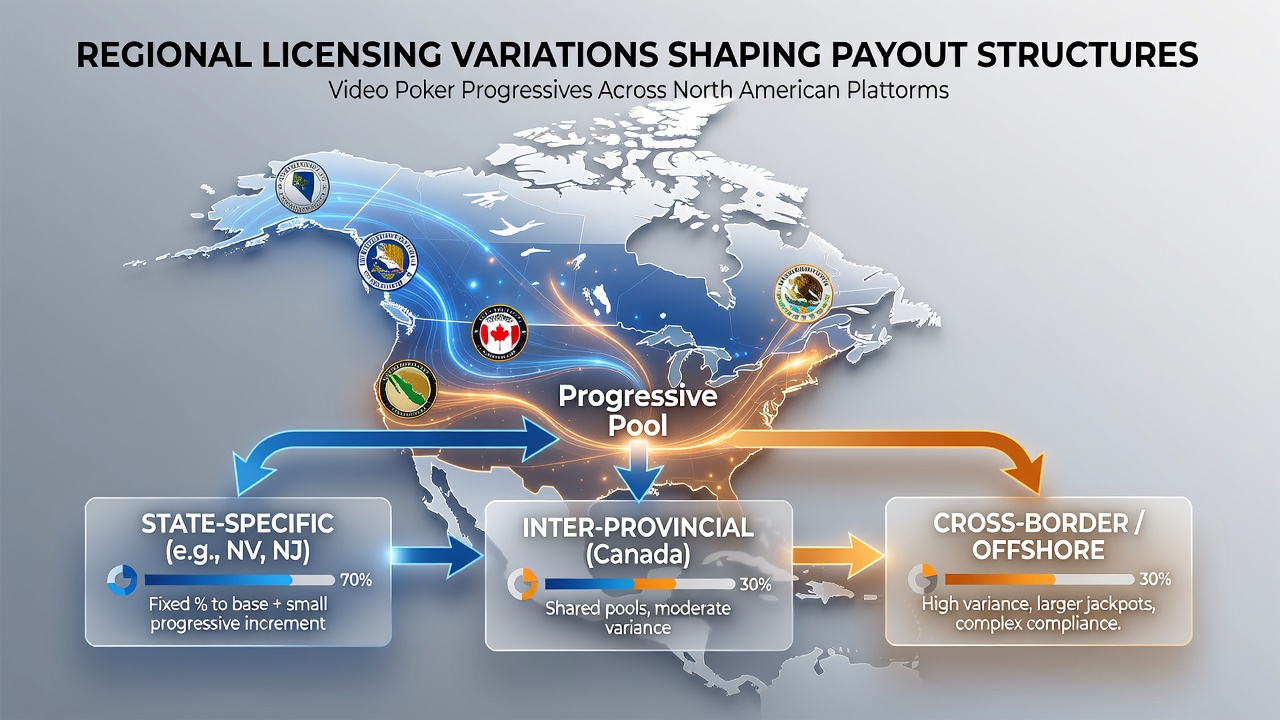
Regional licensing rules create distinct frameworks that directly influence how video poker progressive jackpots accumulate and distribute funds across North American platforms, and these differences emerge clearly when comparing state-level requirements in the United States with provincial standards in Canada. Each jurisdiction sets its own parameters for contribution rates, minimum seed amounts, and payout approval processes, which means operators must calibrate progressive pools according to local mandates rather than applying a uniform model.
Licensing Frameworks Across Jurisdictions
State gaming boards in the US establish baseline rules that dictate how much of each wager feeds into progressive meters, whereas Canadian provinces often require additional layers of oversight through centralized systems that monitor cross-platform linkages. Observers note that these variations produce measurable differences in jackpot growth speeds and reset frequencies, since one region might cap contributions at a lower percentage while another demands higher minimums to ensure rapid accumulation. Data from regulatory filings shows that platforms operating under multiple licenses must segment their progressive pools to comply with each set of rules, which fragments what could otherwise function as a single large network.
Impact on Progressive Contributions and Payouts
Contribution percentages typically range from 1% to 3% of wagers depending on the license, and this range directly affects how quickly a video poker progressive reaches payout thresholds. In jurisdictions with stricter approval timelines for jackpot resets, operators often maintain separate reserve funds to meet regulatory demands for immediate verification, which can slow the overall pace of meter increases compared to regions with streamlined processes. Researchers have tracked session data across platforms and found that players encounter different average jackpot sizes based solely on the licensing environment, since some areas enforce caps on maximum progressive values while others allow uncapped growth until a win occurs.
Key Regulatory Influences on Payout Structures
- Seed amount requirements that establish starting jackpot levels after each payout
- Approval procedures for network linkages between multiple casinos or online platforms
- Reserve fund mandates that protect against delayed payments in high-value wins
- Reporting intervals that determine how frequently operators must disclose meter values to regulators
Platforms licensed in more than one region therefore design modular progressive systems that adjust contribution rates automatically based on player location, and this technical approach ensures compliance while preserving operational efficiency. Evidence from industry reports indicates that such segmentation has become standard practice as more states and provinces authorize video poker progressives in both retail and digital formats.
Case Studies from Key Markets
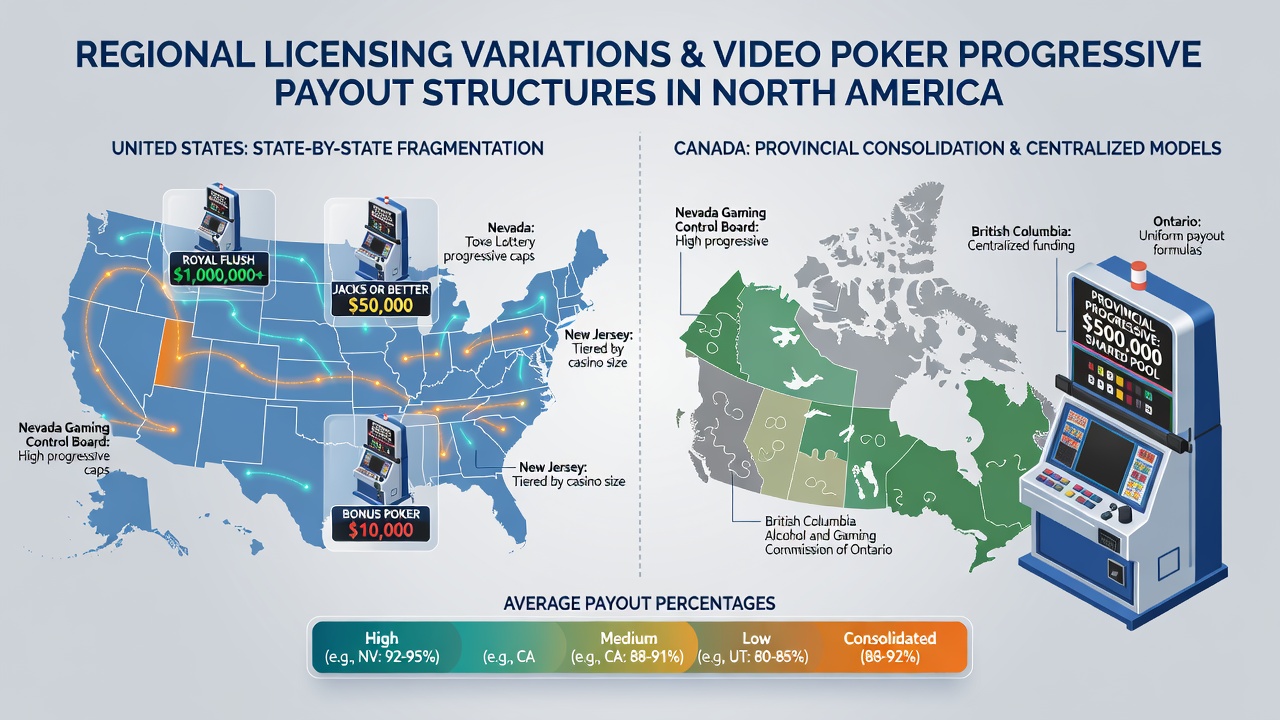
Nevada maintains one of the longest-standing frameworks for video poker progressives, with rules that permit wide-area networks under strict meter monitoring by the Gaming Control Board, while New Jersey applies additional requirements tied to its online gaming license that influence how quickly digital progressives can link to land-based machines. In Ontario, the Alcohol and Gaming Commission enforces centralized reporting that affects how operators structure contributions across multiple sites, producing payout patterns that differ from those observed in Western Canadian provinces. According to data compiled by the American Gaming Association, these regional distinctions have led to noticeable variations in average progressive win frequencies, with some markets recording higher reset values due to mandated minimum contributions.
Operators active in June 2026 continue to adapt their systems as new licensing rounds open in additional states, and these expansions often introduce fresh parameters that further diversify payout structures across the broader North American landscape. Studies of player behavior reveal that jackpot size expectations shift measurably when users move between platforms governed by different rules, since the underlying accumulation mechanics reflect local regulatory priorities rather than a shared standard.
Emerging Trends in 2026
Recent licensing updates have introduced new reporting standards for progressive meters that require real-time data sharing with regulators, which adds another variable to how operators calculate and display available payouts. Platforms that span multiple jurisdictions now employ advanced software layers to reconcile these requirements without disrupting the player experience, and this technical adaptation has become essential for maintaining compliant progressive offerings. Research indicates that regions adopting unified digital licensing portals have seen faster approval cycles for new progressive linkages, which in turn influences the speed at which jackpots grow and trigger.
Conclusion
Regional licensing variations continue to define the operational boundaries for video poker progressives throughout North America, shaping everything from contribution rates to approval timelines and network structures. These differences produce distinct payout environments that operators must navigate through segmented systems and location-specific configurations, while regulatory bodies maintain oversight tailored to their specific mandates. As additional jurisdictions finalize their frameworks, the resulting diversity in progressive mechanics remains a central feature of the North American market.