How Animation Frame Rates in Digital Card Shuffles Alter Decision Patterns During Multi-Hand Video Poker Sessions on Regulated Networks
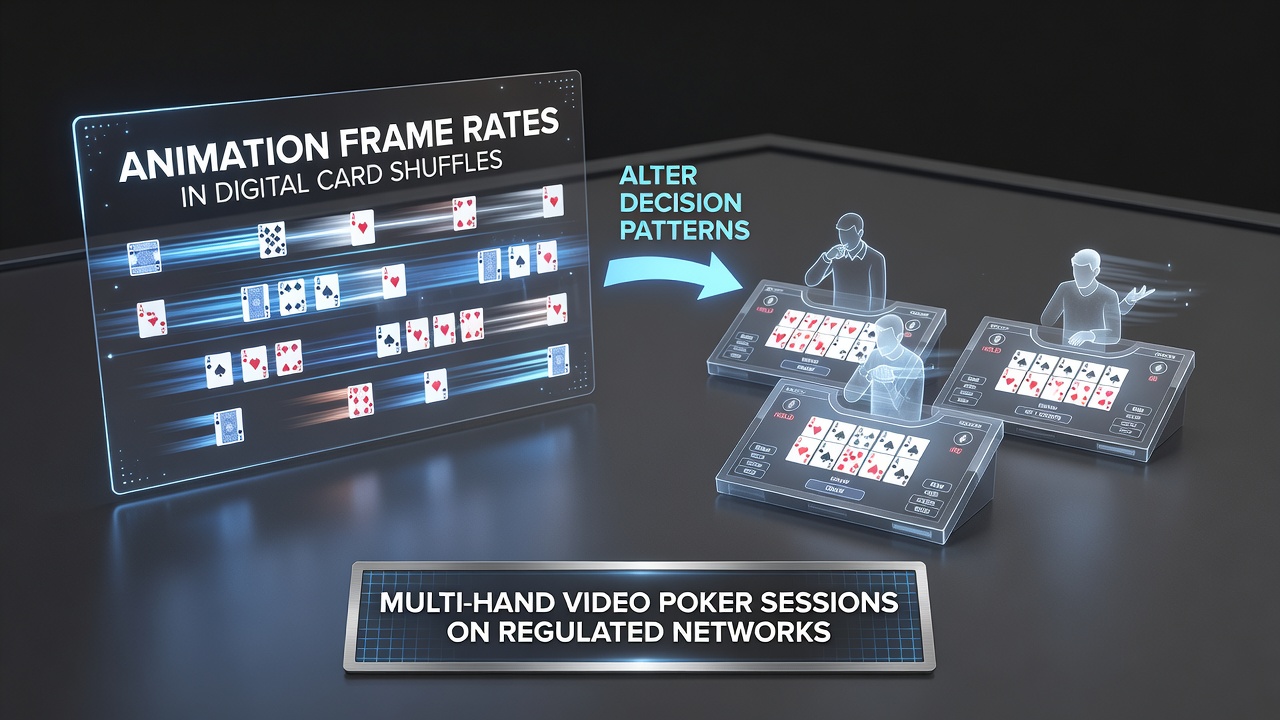
Animation frame rates in digital card shuffles influence how players process visual information during multi-hand video poker sessions on regulated networks, and data from platform operators shows measurable shifts in hold and discard selections when frame rates vary between 30 and 60 frames per second. Operators track these patterns through session logs that record decision timestamps relative to shuffle animation completion, and figures from multiple jurisdictions indicate that smoother animations at higher frame rates correlate with shorter average response intervals in subsequent hands.
Technical Mechanics of Frame Rate Implementation
Digital shuffle animations render card movements through sequential frames that platforms adjust based on hardware specifications and regulatory testing protocols, while lower frame rates produce noticeable stutter that extends the perceived duration of the shuffle sequence. Network operators calibrate these settings to comply with fairness standards established by bodies such as the Nevada Gaming Control Board, and studies of session data reveal that players encounter different visual cues depending on whether the animation runs at standard broadcast rates or elevated speeds designed for modern displays. Those who've examined server-side configurations note that frame rate adjustments often occur alongside RNG seed refreshes, which creates combined effects on pacing that session analytics capture through aggregated player response metrics.
Observed Shifts in Decision Timing
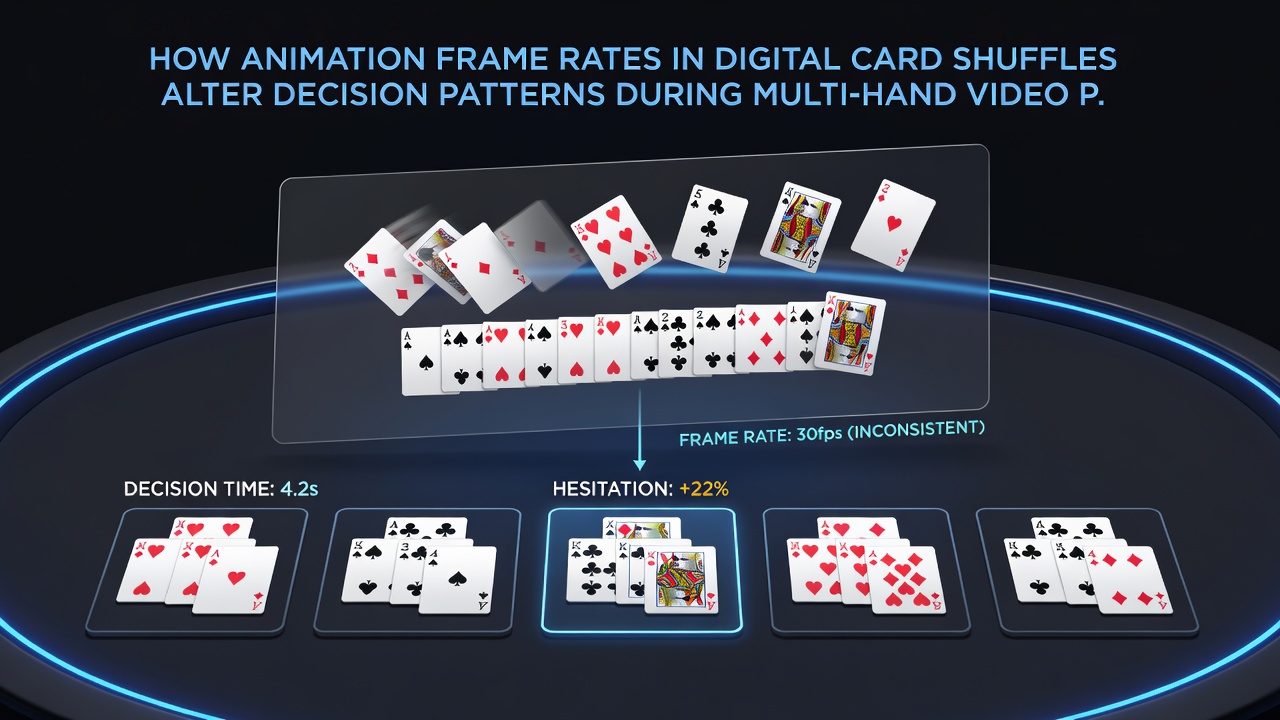
Multi-hand video poker requires simultaneous evaluation of up to five hands, and animation frame rates alter the window during which players finalize selections before the next draw initiates. Data collected across regulated platforms shows that sessions using 60 frames per second animations exhibit tighter clustering of decision events around the 1.2-second mark after shuffle completion, whereas 30 frames per second sessions spread those same events across a broader 1.8-second interval. Researchers analyzing these logs find that the extended visual transition at lower frame rates coincides with increased frequency of mid-sequence changes to hold patterns, particularly in variants where players manage multiple rows of cards under shared draw mechanics.
Regulatory Context and Data Collection Practices
Regulated networks mandate detailed logging of animation parameters alongside player actions, and reports submitted to oversight agencies document how frame rate variations interact with session duration limits. In July 2026, several North American platforms updated their compliance documentation to include frame rate metadata after audits highlighted inconsistencies in visual rendering across different device types. According to records maintained by the Alcohol and Gaming Commission of Ontario, operators must now submit comparative analyses of decision distributions under varying animation conditions when renewing certification for multi-hand titles. These requirements ensure that any measurable influence on player behavior remains transparent to regulators while preserving the underlying randomness of card distribution.
Patterns Across Device and Network Variations
Players access these games through desktop clients, mobile applications, and browser-based interfaces that render animations at different native frame rates depending on hardware capabilities, and aggregated data indicates that mobile sessions display greater sensitivity to frame rate changes because smaller screens compress visual motion cues. Network latency compounds these effects when packets carrying animation frames arrive out of sequence, which produces irregular stutter even on titles set for higher frame rates. Observers reviewing transaction records from multiple operators note that sessions conducted on high-speed connections maintain more consistent decision intervals regardless of animation settings, while variable connections amplify the impact of lower frame rates on selection timing.
Comparative Analysis With Other Game Types
Video poker differs from slots and table games in its requirement for active player input between draws, and frame rate effects appear more pronounced here because the shuffle animation serves as the primary timing signal for decision windows. Industry reports compiled by the American Gaming Association show that similar animation adjustments in digital blackjack produce smaller shifts in player behavior, likely because those games feature dealer pacing rather than automated shuffle sequences. Multi-hand formats amplify the observed patterns because each hand row inherits the same visual transition, which creates cumulative timing pressure across the session.
Conclusion
Platform data continues to document connections between animation frame rates and decision timing in multi-hand video poker on regulated networks, with session metrics reflecting adjustments in response windows when frame rates change. Operators maintain these parameters within compliance frameworks that prioritize transparency and fairness, while ongoing collection of timestamped action logs provides the basis for further examination of visual rendering effects. Regulatory updates in 2026 have reinforced requirements for consistent reporting of these technical variables across participating jurisdictions.