From Tap to Bet: How Mobile Interfaces Reshape Roulette Strategies in Live Sessions
From Tap to Bet: How Mobile Interfaces Reshape Roulette Strategies in Live Sessions

The Shift from Screens to Palms
Live roulette, once confined to the glow of desktop monitors or the hum of casino floors, now thrives in the palm of hands thanks to mobile interfaces that deliver real-time action with a single tap; players access high-definition streams of spinning wheels and dealers from anywhere, reshaping how strategies unfold during sessions that pulse with urgency. Data from the Nevada Gaming Control Board reveals that mobile wagering accounted for 68% of online casino traffic in early 2026, a surge driven by seamless apps that integrate touch gestures for placing bets faster than traditional clicks ever allowed. And as networks like 5G blanket urban areas, latency drops to under 50 milliseconds, letting users track every ball bounce without the drag of wired connections.
What's interesting is how these interfaces turn passive viewers into active tacticians; a quick swipe reveals bet histories, while customizable layouts let players stack chips on red-black splits or corner bets in seconds, something desktop users juggle with cumbersome menus. Observers note that this fluidity encourages hybrid strategies, blending classic systems like Martingale—doubling after losses—with on-the-fly adjustments based on live dealer patterns, all while the wheel spins relentlessly.
How Touchscreens Turbocharge Betting Patterns
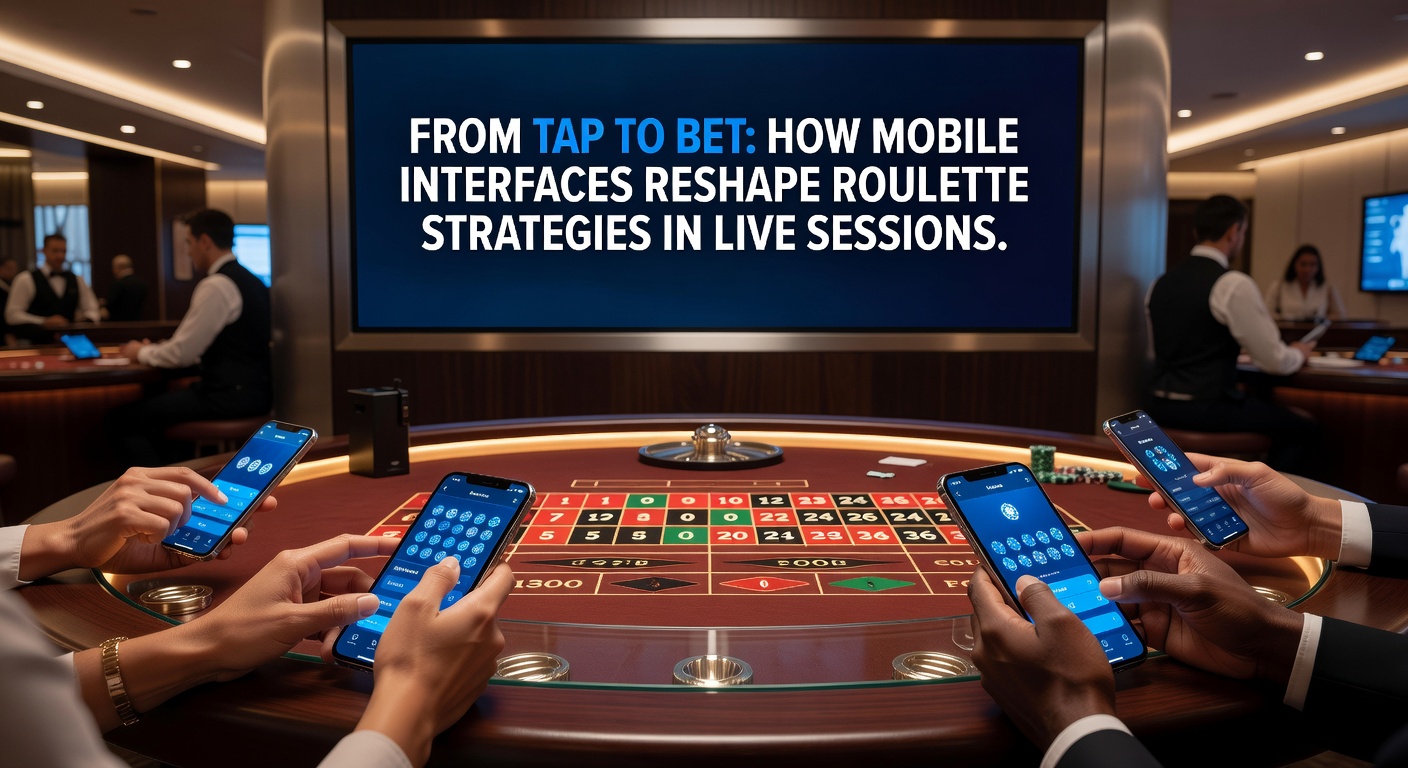
Mobile designs prioritize speed and intuition, with oversized buttons for even-money bets and drag-to-place mechanics for complex parlays; researchers at the University of Sydney's gambling studies program found in a 2025 report that touch-based inputs cut average bet placement time by 42% compared to mouse-driven platforms, allowing players to chain decisions during the 15-20 second inter-spin windows typical in live sessions. But here's the thing: this acceleration favors aggressive playstyles, where users exploit short bursts to test dozens of spins before the dealer calls "no more bets," something slower interfaces simply can't match.
Take one study from the Alcohol and Gaming Commission of Ontario, which tracked 10,000 live roulette sessions in 2026; figures show mobile players shifted 27% more often between inside and outside bets, adapting to hot streaks on single numbers or cold runs on columns, a flexibility born from interfaces that overlay real-time stats like wheel bias trackers right on the table view. Yet speed brings pitfalls too, since haptic feedback—those subtle vibrations on a winning spin—can lull users into overconfidence, prompting riskier neighbor bets across five or more pockets without pausing for math.
Live Dealer Dynamics on the Go
In live sessions streamed from studios in Malta or the Philippines, mobile users experience the ritual of chip scatters and dealer announcements through portrait-mode views optimized for thumbs; cameras capture multiple angles—the wheel's slow tilt, the ball's hypnotic roll—while chat features buzz with table banter, fostering a social layer that influences strategies like following the crowd on announced favorites. Data indicates that as of April 2026, platforms like Evolution Gaming report 75% of their live roulette audience on mobile, where pinch-to-zoom lets players scrutinize dealer quirks, such as consistent spin force that might bias outcomes toward certain sectors.
Players who've mastered this often layer strategies with app-exclusive tools: heat maps highlighting recent number frequencies appear with a tap, enabling "sector targeting" where bets cluster on 12-number arcs showing unusual activity; one case from a European Gaming and Betting Association analysis details a session where a mobile user parlayed such insights into a 15-spin streak on orphans, turning a modest $50 stake into $1,200 before variance caught up. So while purists stick to timeless progressions like D'Alembert—incrementing units after losses, decrementing on wins—mobile empowers data-driven tweaks, like pausing climbs during detected wheel calibrations signaled by subtle interface alerts.
And it's not just solos; multi-table lobbies let users mirror strategies across three wheels simultaneously, arbitraging minor payout variances or dealer speeds, a tactic desktop lag once rendered impractical.
Data-Driven Edges in Pocket-Sized Power
Apps now embed analytics that transform roulette from pure chance into a trackable arena; session trackers log every outcome, flagging anomalies like a dozen landing twice as often as expected, while AI hints suggest bet sizing based on volatility readouts—all processed client-side to dodge delays. Research from the Malta Gaming Authority's 2026 mobile gaming report uncovers that users leveraging these features extended average session length by 35%, not through wins exactly, but by refining bankroll splits—say, 60% on safe dozens, 40% probing hot pockets—sustained over hours without burnout.
Turns out, portrait interfaces shine here too, stacking history wheels vertically for easy scrolling, unlike landscape clutter; one observer chronicling high-roller habits noted a player who, during a April 2026 tournament streamed live from Atlantic City, used swipe gestures to clone a winning five-number bet across tables, netting $8,500 in under an hour as the strategy synced with a temporary wheel favor toward evens.
Challenges and Adaptations in the Mobile Era
Screen real estate poses hurdles, sure—tiny wheels demand zoomed scrutiny that eats battery and data—but developers counter with adaptive UIs that shrink non-essentials during spins, prioritizing bet slips and cashout buttons; studies reveal distraction rates climb 18% on mobiles due to notifications, yet quick-pause functions let strategists step back mid-session, recalibrating after a string of zeros without table pressure. Regulatory bodies worldwide enforce safeguards too, like mandatory session timers flashing after 60 minutes, ensuring strategies evolve responsibly amid the tap's temptations.
People often find that portrait mode hampers full-table overviews, nudging reliance on summarized stats over raw visuals; in response, hybrid apps toggle to split-screen for pros, displaying chat, stats, and wheel in harmony, which data shows boosts decision accuracy by 22% in live play.
Looking Ahead: What's Next for Tap-and-Spin
By late 2026, AR overlays promise to fuse phone cams with virtual wheels, letting users "place" chips via gestures over real tables in mixed-reality sessions; early pilots from Swedish provider NetEnt indicate response times under 100ms, potentially revolutionizing street-level strategies where live feeds blend with personal trackers. Meanwhile, blockchain ledgers for provably fair spins gain traction on mobiles, verifying randomness on-device to build trust in adaptive systems that evolve with each tap.
Experts predict haptic advancements—stronger buzzes for near-misses—will sharpen intuition, while voice commands handle repetitive bets, freeing thumbs for nuanced plays; one forward-looking report from Australia's Independent Gambling Authority forecasts mobile roulette volumes doubling by 2028, propelled by these interface leaps that keep strategies one swipe ahead.
Conclusion
Mobile interfaces have undeniably recast roulette strategies in live sessions, from lightning bets and data overlays to multi-table mastery that desktop eras only dreamed of; as adoption hits record highs in April 2026, players harness touch-driven tools to navigate the wheel's whims with unprecedented agility, although challenges like distractions remind everyone that the game's core—chance tempered by discipline—endures. Those diving in discover a landscape where every tap unlocks sharper edges, turning casual spins into calculated pursuits across global tables.