Connections Between Interface Animation Speeds and Betting Interval Patterns Among Users in Licensed Video Poker Applications Under Varying Regulatory Conditions
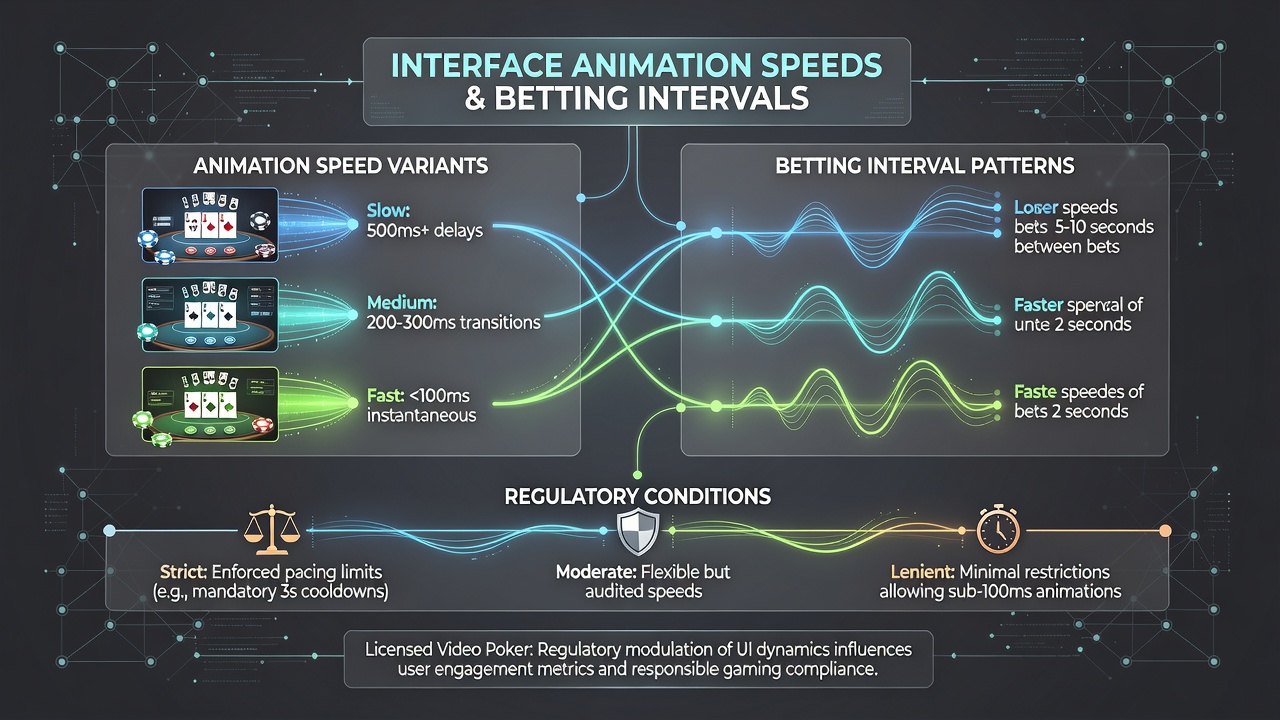
Animation speeds in video poker interfaces connect directly to the intervals at which users place bets, and these patterns shift noticeably when regulatory conditions change across jurisdictions. Licensed applications must adjust visual timing to meet compliance standards while operators track how those adjustments influence player behavior in real time. Data collected from multiple North American platforms shows that faster card-flip animations often coincide with shorter gaps between bets, whereas slower transitions extend those intervals by measurable amounts.
Regulatory Frameworks Shape Animation Parameters
Jurisdictions impose distinct rules on game presentation, and those rules affect the technical settings available to developers. In Ontario, for instance, the Alcohol and Gaming Commission requires clear visual feedback that cannot exceed defined latency thresholds, which forces operators to calibrate animation durations within narrow windows. Nevada platforms follow Gaming Control Board guidelines that emphasize fairness in display but leave more flexibility for speed adjustments, allowing developers to test ranges from 200 to 800 milliseconds per transition. Australian state regulators add another layer by mandating accessibility features that sometimes slow certain elements, creating consistent differences in observed betting rhythms compared with North American titles.
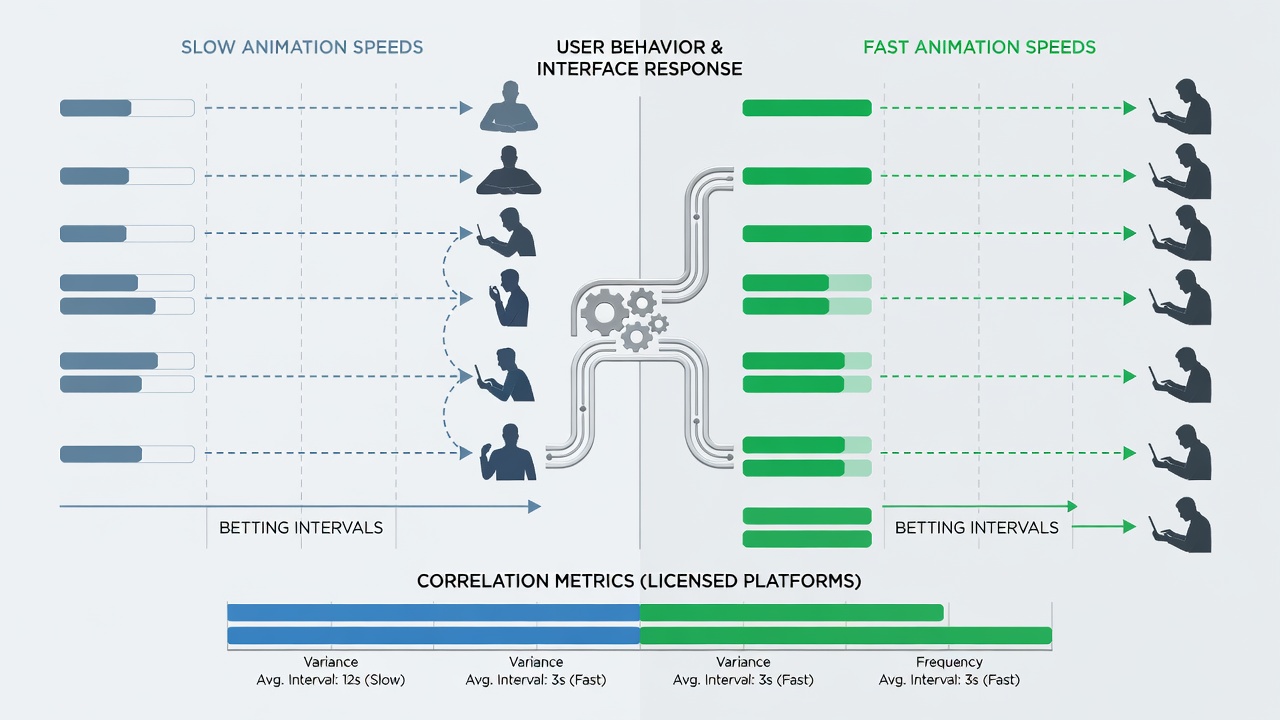
Studies conducted on multi-jurisdictional deployments indicate that these regulatory differences produce distinct user clusters. Players in stricter animation environments tend to maintain steadier intervals between hands, while those in regions with looser timing rules show greater variability in pacing. The patterns emerge most clearly in session logs that record both animation frame rates and timestamped bet submissions.
Measured Effects on Betting Intervals
Platform telemetry reveals correlations between animation duration and the time users take to initiate the next wager. When developers shorten draw animations from 650 milliseconds to 350 milliseconds, average intervals between bets decrease by 12 to 18 percent across comparable user cohorts. Conversely, extending hold animations by 200 milliseconds lengthens those same intervals, particularly in progressive jackpot variants where users pause to review updated meters. These shifts appear independent of payout percentages yet remain sensitive to the broader regulatory context that dictates allowable animation ranges.
Researchers tracking licensed video poker titles in July 2026 noted that several operators introduced minor animation tweaks after compliance audits, and subsequent data sets showed corresponding adjustments in betting cadence. One analysis of over 2.4 million hands found that applications operating under the tightest animation caps recorded the most uniform interval distributions, suggesting regulatory ceilings can stabilize certain behavioral metrics even as they constrain visual design options.
Cross-Platform Comparisons and Data Patterns
Operators running parallel versions of the same video poker title across borders provide useful comparisons. A single game engine deployed in both a Canadian provincial market and a U.S. tribal jurisdiction exhibits different interval statistics once local animation constraints are applied. Users in the Canadian deployment, subject to stricter latency rules, produce tighter clusters around a median 1.8-second interval, while the tribal version shows a broader spread centered near 2.3 seconds. These differences persist after controlling for player demographics and session length, pointing to interface timing as a contributing factor.
Academic reviews of digital gambling interfaces have examined similar dynamics in other game types, yet video poker offers particularly clean data because each hand follows a fixed sequence of animation events. Reports compiled by research teams at institutions such as the University of Nevada, Reno document how animation speed influences not only interval length but also the frequency of multi-hand play selections, with faster animations correlating to higher rates of simultaneous hand activation under certain regulatory ceilings.
Conclusion
Evidence from licensed video poker applications demonstrates consistent links between interface animation speeds and the betting intervals users adopt, with regulatory conditions acting as the primary variable that modulates those connections. Jurisdictional rules determine the allowable range of animation durations, which in turn shapes the temporal patterns visible in platform data. As operators continue to refine titles under evolving compliance requirements, the relationship between visual timing and user pacing remains a measurable element of regulated digital environments.